
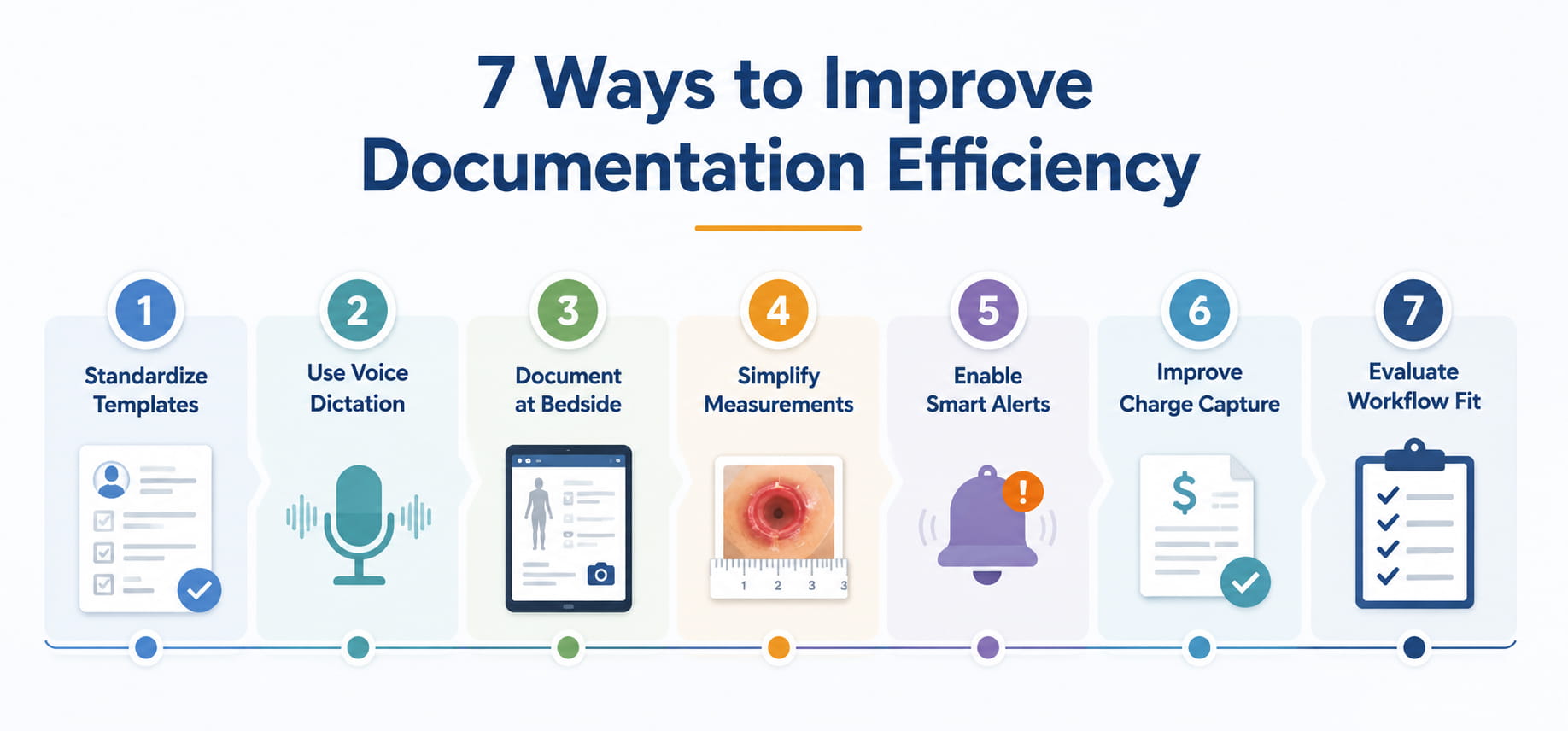
1. Standardize Documentation Templates
One of the fastest ways to improve documentation speed is to eliminate repetitive data entry.
A modern post-acute EHR for wound care should provide structured templates that support consistency across providers and facilities. Standardized assessments help reduce variation while ensuring key clinical details are captured every time.
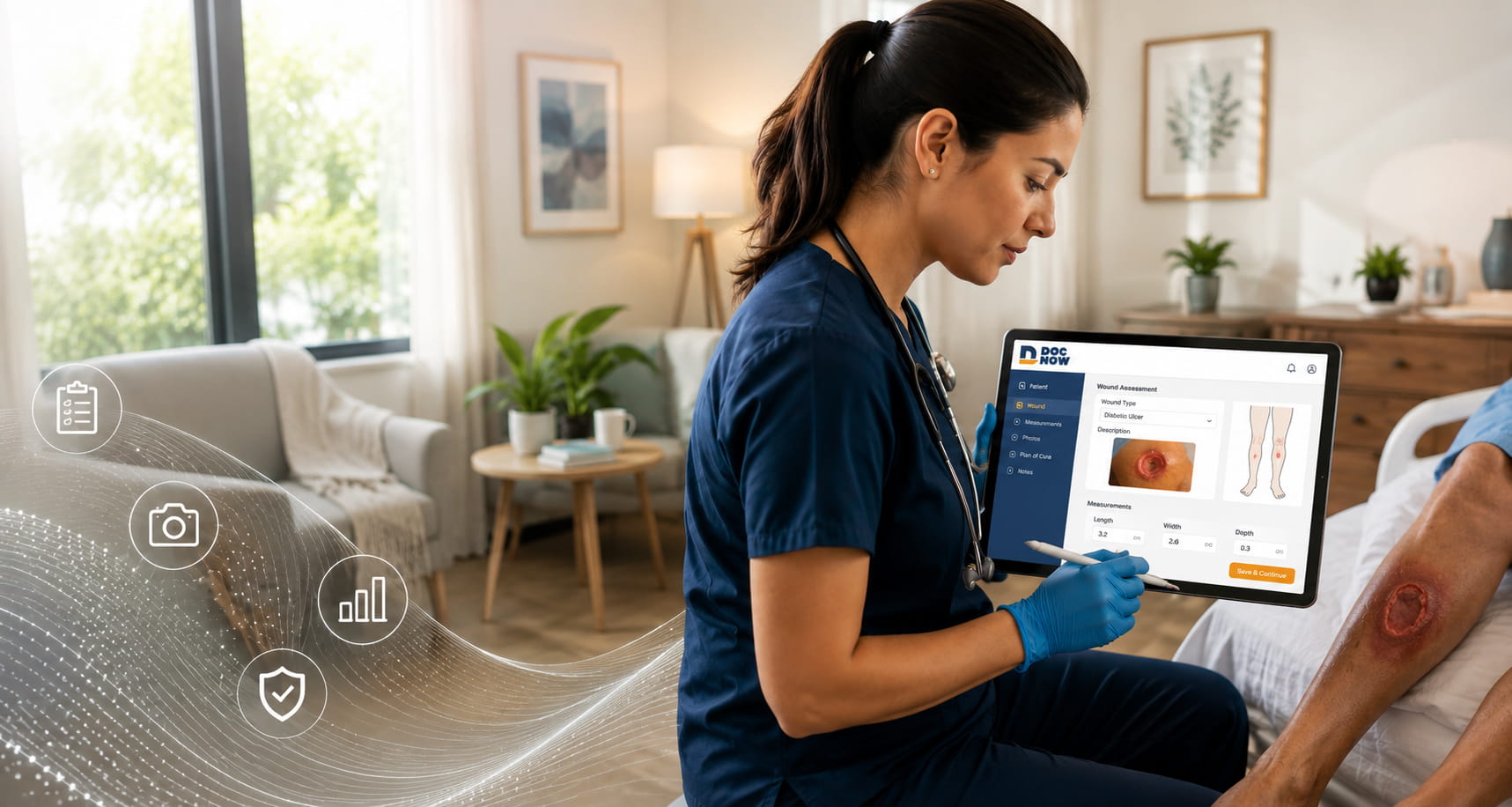
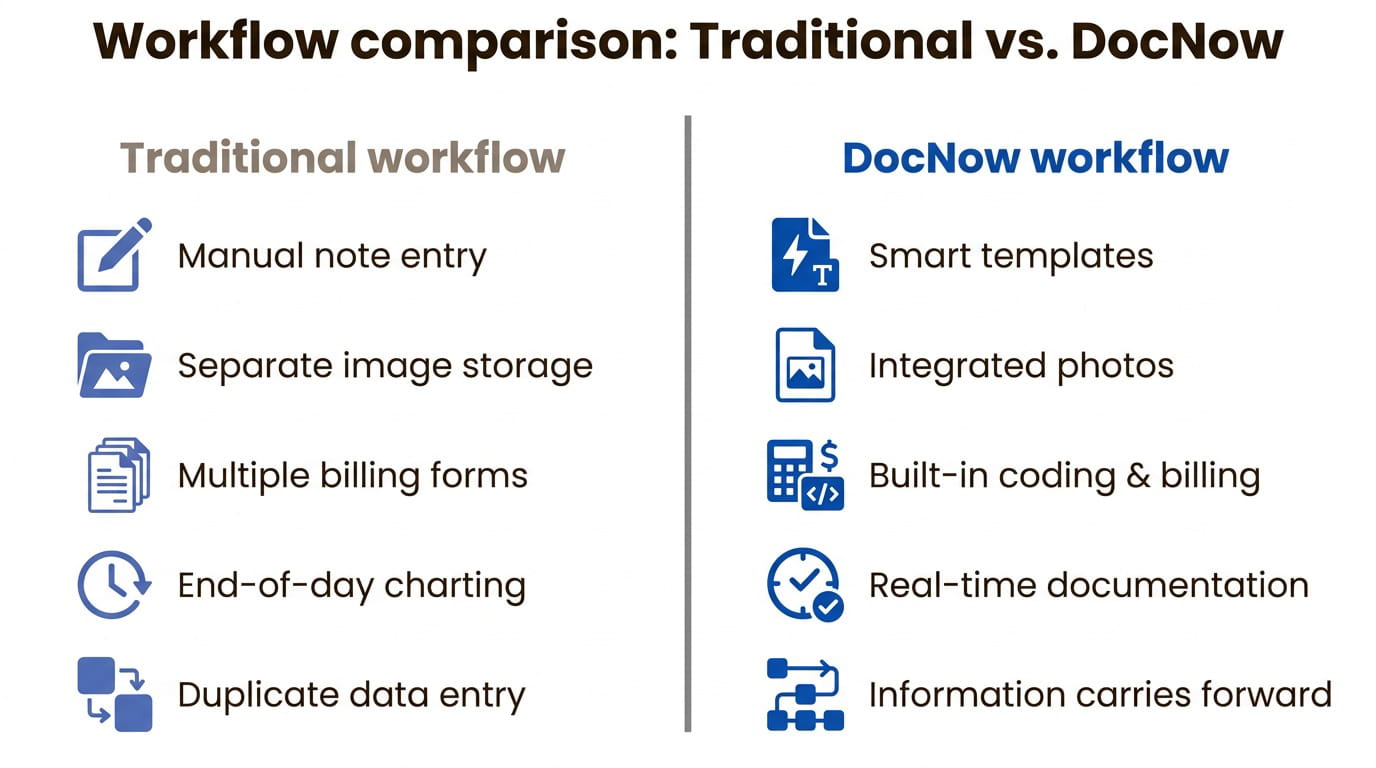
For example, when wound assessment information automatically carries forward into future visits, providers can review, compare, and update existing information rather than documenting the same details from scratch each week.
This approach helps:
- Reduce documentation time
- Improve consistency between visits
- Minimize charting errors
- Support more accurate wound progression tracking
The result is faster documentation and a clearer clinical picture over time.
2. Utilize Voice Recognition Technology
Many wound care specialists can speak significantly faster than they type.
Voice recognition tools allow providers to document findings naturally while remaining focused on patient care. Integrating solutions such as Dragon Dictation directly into the workflow enables clinicians to capture detailed notes without interrupting the patient encounter.
Benefits include:
- Faster note completion
- Reduced administrative burden
- More detailed clinical documentation
- Improved provider satisfaction
When paired with smart templates and structured workflows, voice recognition can significantly improve documentation speed and usability.
Our providers spend less time documenting and more time with patients because information carries forward and billing is integrated into the workflow.
3. Optimize Mobile Documentation at the Bedside
Documentation often becomes inefficient when providers must move between paper notes, mobile devices, and desktop systems.
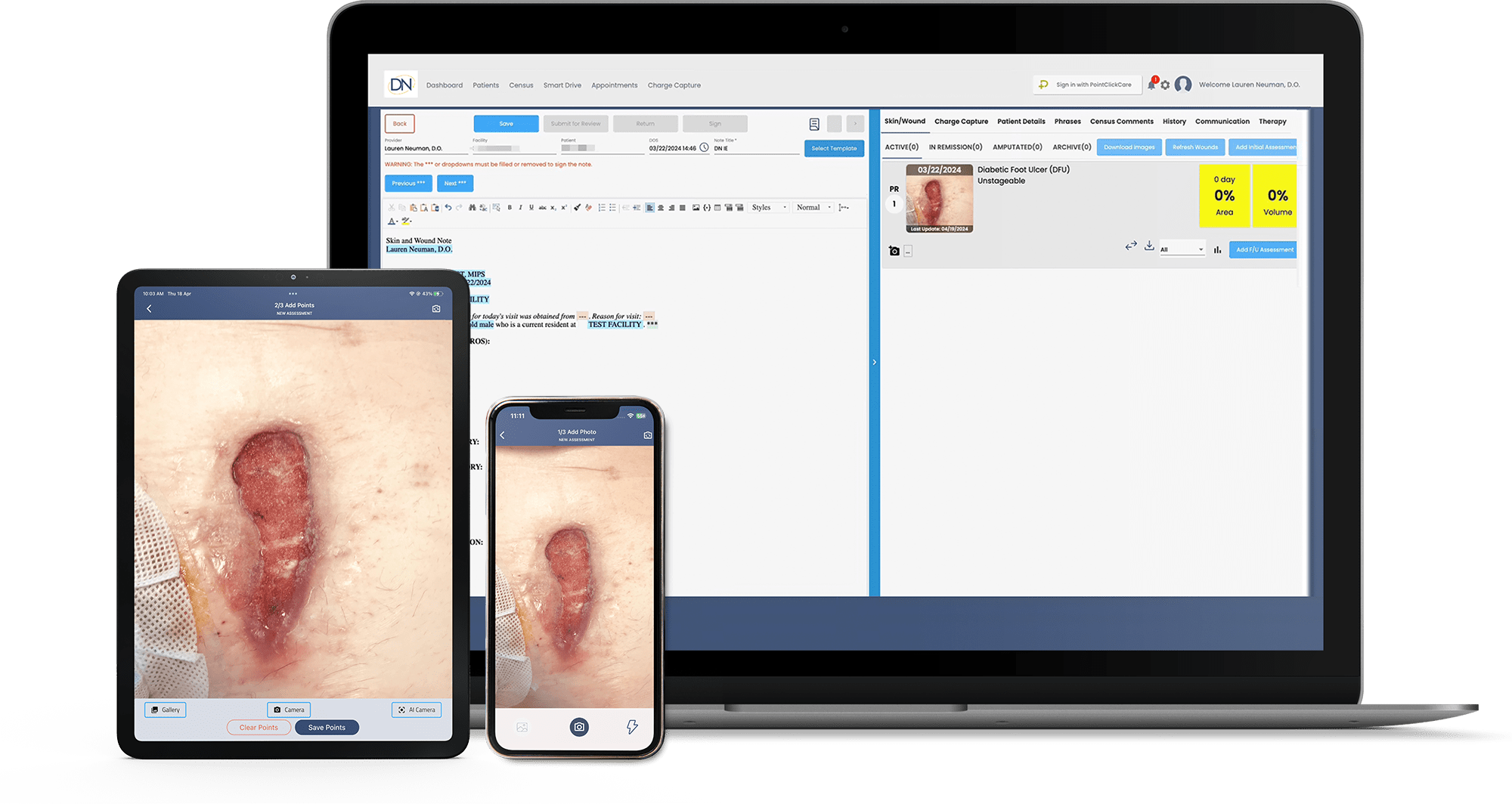
A well-designed mobile wound care EHR allows clinicians to document in real time while performing assessments. Information entered during the visit should immediately sync across the platform, eliminating duplicate entry and reducing the risk of missing information.
Features that support bedside efficiency include:
- Real-time documentation updates
- Mobile wound assessments
- Image uploads
- Wound measurements
- Integrated patient records
When providers can complete documentation during the patient encounter, organizations often see improved accuracy and reduced end-of-day charting.
4. Streamline Wound Measurements and Photography
Accurate measurements and images are critical components of wound care documentation.
However, manually transferring measurements between systems or re-entering information week after week can slow clinicians down considerably.
The most effective platforms simplify this process by allowing providers to:
- Upload wound photographs directly into the patient record
- Enter measurements at the point of care
- Compare historical wound progression
- Carry measurements forward into future assessments for review and editing
These capabilities reduce administrative work while helping providers quickly identify trends and make informed treatment decisions.
5. Support Clinical Decision-Making with Smart Alerts
Documentation should do more than store information, it should help clinicians act on it.
Configurable notification banners, visual indicators, and clinical decision-support tools can help providers identify wound progression concerns, documentation gaps, or follow-up needs before they become larger issues.
When clinical insights are embedded directly within the workflow, providers spend less time searching for information and more time making informed care decisions.
This is especially valuable for organizations managing complex wound care agency workflows across multiple facilities and care teams.
6. Simplify Charge Capture and Billing
Documentation and reimbursement are closely connected.
Incomplete or disconnected workflows can lead to missed CPT codes, billing delays, and lost revenue opportunities.
The best wound care platforms make charge capture and billing a natural extension of documentation by providing:
- Easy access to frequently used ICD-10 and CPT codes
- Integrated coding workflows
- Billing functionality within the EHR
- Reduced reliance on separate billing sheets
By connecting documentation and billing activities, providers can improve accuracy while reducing administrative overhead.
7. Evaluate EHR Platforms Based on Workflow Fit
When conducting an EHR platform comparison, organizations often focus heavily on feature lists. While functionality matters, workflow design is equally important.
Clinical teams should evaluate how well a platform supports:
- Mobile documentation
- Wound imaging and measurements
- Voice dictation
- Coding and billing workflows
- Data integration
- Clinical decision support
- Longitudinal wound tracking
The most effective solutions are designed specifically for post-acute providers and align with the realities of bedside wound care.
Ready to Get Started?
DocNow Post-Acute EHRs is live and ready to simplify your prescribing. If you're a DocNow customer, it's time to see how easy prescribing can be.
REQUEST A DEMO


