
Wound care documentation shouldn't compete with patient care for a clinician's time. For many wound care providers in skilled nursing and long-term care settings, documentation means navigating generic templates, re-entering information, switching systems, uploading photos manually, and finishing notes well after the patient encounter.
The problem isn't that wound care teams aren't documenting efficiently. It's that many EHR workflows weren't designed around how wound care actually happens.
A post-acute EHR built with wound care in mind can remove many of these friction points helping clinicians document more efficiently, capture the information they need, and spend less time fighting their workflow.
1. Generic Templates Aren't Built for Wound Care
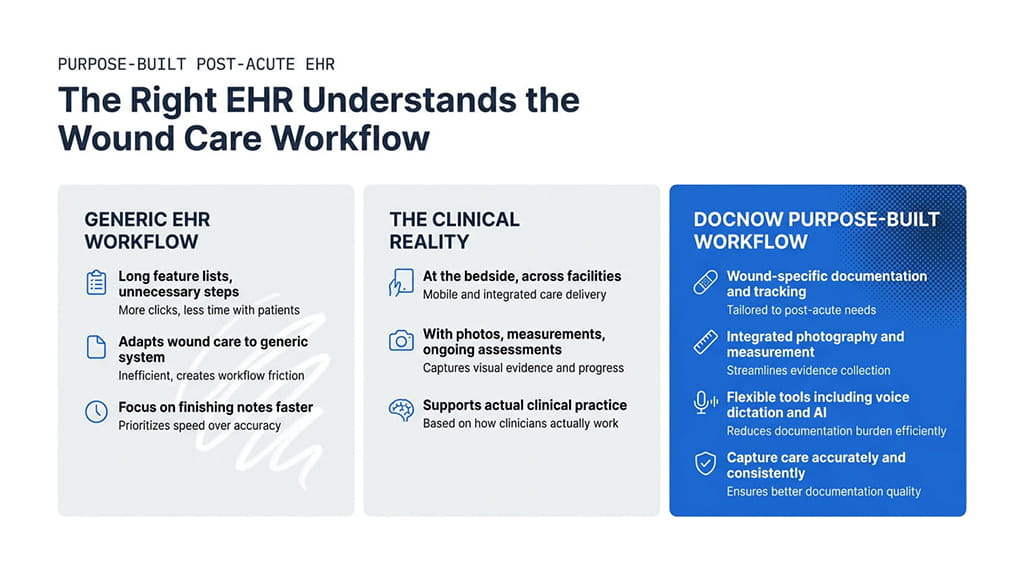
One of the biggest sources of EHR friction is surprisingly simple: the workflow wasn't designed for the job. Generic EHR templates often require wound care clinicians to navigate fields that aren't relevant to their encounters while relying on free text for information that should be structured.
Wound care documentation has its own requirements, including wound location, measurements, tissue characteristics, drainage, treatment, and progression over time. When those elements aren't easy to access, clinicians spend more time clicking, scrolling, and typing.
What to look for:
A wound care EHR should make the information clinicians document most often easy to find and easy to enter. That's the approach DocNow takes with purpose-built wound care workflows designed around the needs of post-acute providers.
2. Bedside Documentation Is Difficult
Wound care happens at the bedside. So why should documentation require a desktop workstation?
When an EHR isn't designed for efficient mobile use, clinicians may write down information during rounds and enter it into the system later. That creates an extra documentation step and creates more opportunities for information to be delayed, forgotten, or entered incorrectly.
The better approach is to make documentation possible where care is happening. DocNow's workflow is designed to support clinicians as they move through their rounds, helping them document closer to the point of care. Fewer workarounds. Less duplicate entry. A smoother rounding workflow.
3. Wound Photography Lives Outside the Workflow
Wound photography can be an important part of documenting wound progression. But if taking a photo means opening a separate application, saving the image, uploading it, and manually attaching it to the correct patient record, the process quickly becomes another administrative task.
The goal should be simpler: See the wound. Capture the image. Keep it with the encounter.
DocNow integrates wound photography into the documentation workflow, helping clinicians keep wound images connected to the patient's record without relying on a disconnected process.
4. Clinicians Have to Re-Enter the Same Wound Information
Wound care is inherently longitudinal. Today's assessment builds on yesterday's assessment. Measurements change. Tissue characteristics change. Treatment plans evolve.
An EHR that forces clinicians to recreate the same information from scratch makes every follow-up encounter harder than it needs to be.
Carry-forward functionality allows clinicians to bring relevant information from previous assessments into the current workflow, then review and update it as needed. That means clinicians can focus on what changed instead of spending time recreating what hasn't.
5. Wound Measurements Are Hard to Track Over Time
A single wound measurement tells you something. A series of measurements tells you much more.
Length, width, depth, and other wound characteristics can help clinicians understand how a wound is progressing. But when that information is buried inside old notes or spread across different screens, comparing visits takes unnecessary effort.
A wound-focused EHR should make historical information easier to find and use. The goal isn't simply storing wound measurements. It's making the information useful during the next encounter.
DocNow helps bring wound documentation into a more structured workflow so clinicians can spend less time searching for previous information and more time evaluating the patient's current condition.
6. Facility Systems Don't Talk to Each Other
Post-acute wound care providers rarely work in just one environment. Clinicians may round across multiple skilled nursing facilities, each with its own systems, workflows, and patient information.
Without the right integrations, providers can find themselves repeatedly searching for demographics, diagnoses, insurance information, and other patient details before they can even begin documenting the encounter. That creates unnecessary work and increases the opportunity for data-entry errors.
DocNow supports integrations with PointClickCare and MatrixCare, helping reduce duplicate data entry and give providers access to the information they need within their workflow. For clinicians working across multiple facilities, interoperability isn't a nice-to-have. It's part of an efficient workflow.
7. Slow Performance Adds Up During Rounds
Slow loading screens, repeated logins, unnecessary navigation, and system delays can turn a straightforward rounding workflow into a frustrating one.
For wound care providers moving quickly between patients, EHR performance is part of productivity. A purpose-built post-acute platform should make it easy to move from one patient to the next without unnecessary interruptions.
DocNow is designed around the pace and mobility of post-acute care, helping clinicians keep documentation moving alongside their rounds.
8. Wound Documentation Doesn't Provide Enough Guidance
Wound care documentation requires precision. Clinicians need to consistently capture the information necessary to describe wounds, track changes, and support appropriate clinical decision-making.
When an EHR provides little structure or guidance, clinicians may have to rely on memory, free-text documentation, or separate references. That creates variation in how information gets documented.
The better approach is to build relevant structure and guidance into the workflow itself. When the EHR helps guide the documentation process, clinicians can spend less time figuring out where information belongs and more time focusing on the patient.
9. Typing Is Still Doing Too Much of the Work
Even when everything else works well, typing can still be a major documentation bottleneck. Providers may see patients throughout the day and then return to the computer later to finish notes. For clinicians managing busy rounds, that can push documentation into the evening.
That's where alternative documentation methods can make a difference. DocNow's DocSense brings ambient AI and voice dictation directly into the EHR, giving providers more flexibility in how they document.
Instead of making every clinician work the same way, DocNow gives them options. Type it. Dictate it. Let ambient AI help. The goal is simple: make documentation fit the clinician's workflow not the other way around.
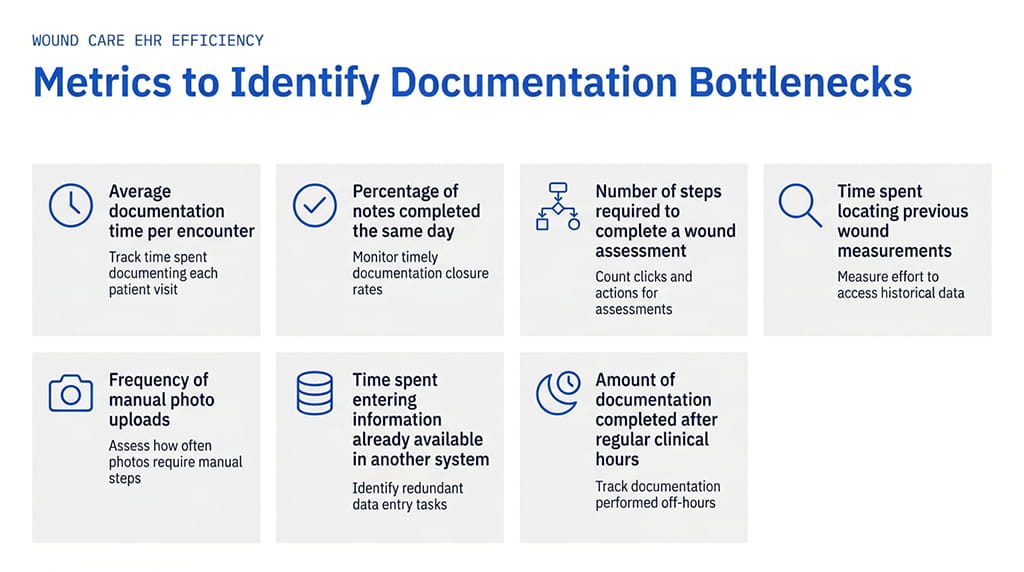
How to Tell If Your Wound Care EHR Is Slowing You Down
Why Purpose-Built EHRs Can Make a Difference
The Bottom Line
If wound care clinicians are spending too much time clicking through irrelevant fields, re-entering information, uploading photos, searching for previous measurements, or finishing notes after hours, the problem may not be the clinicians.
It may be the EHR. The right post-acute EHR should remove friction from the workflow not add to it. That's the difference a wound-focused platform like DocNow is designed to make.
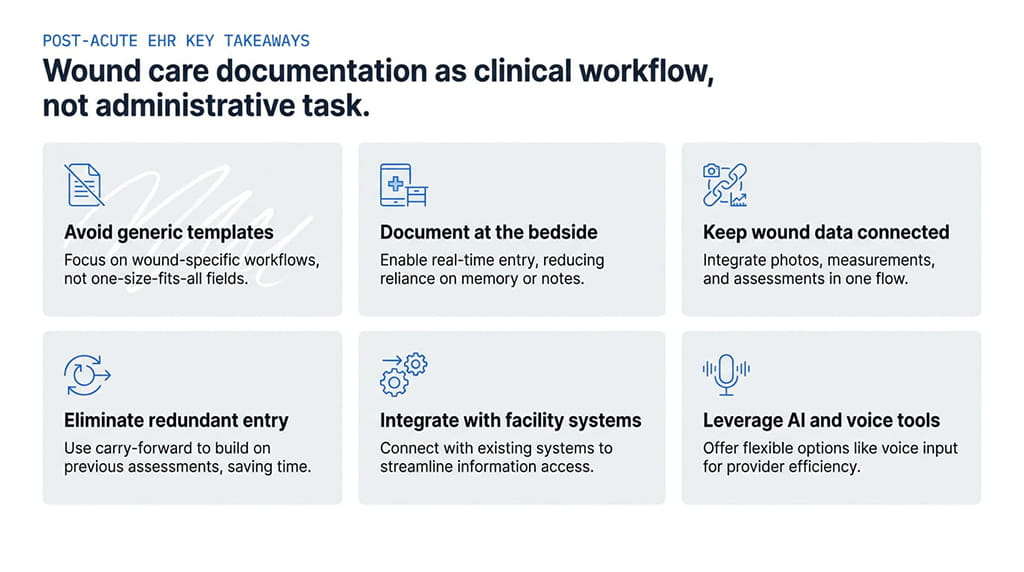
Key Takeaways
Ready to Get Started?
DocNow Post-Acute EHRs is live and ready to simplify your prescribing. If you're a DocNow customer, it's time to see how easy prescribing can be.
REQUEST A DEMO


