
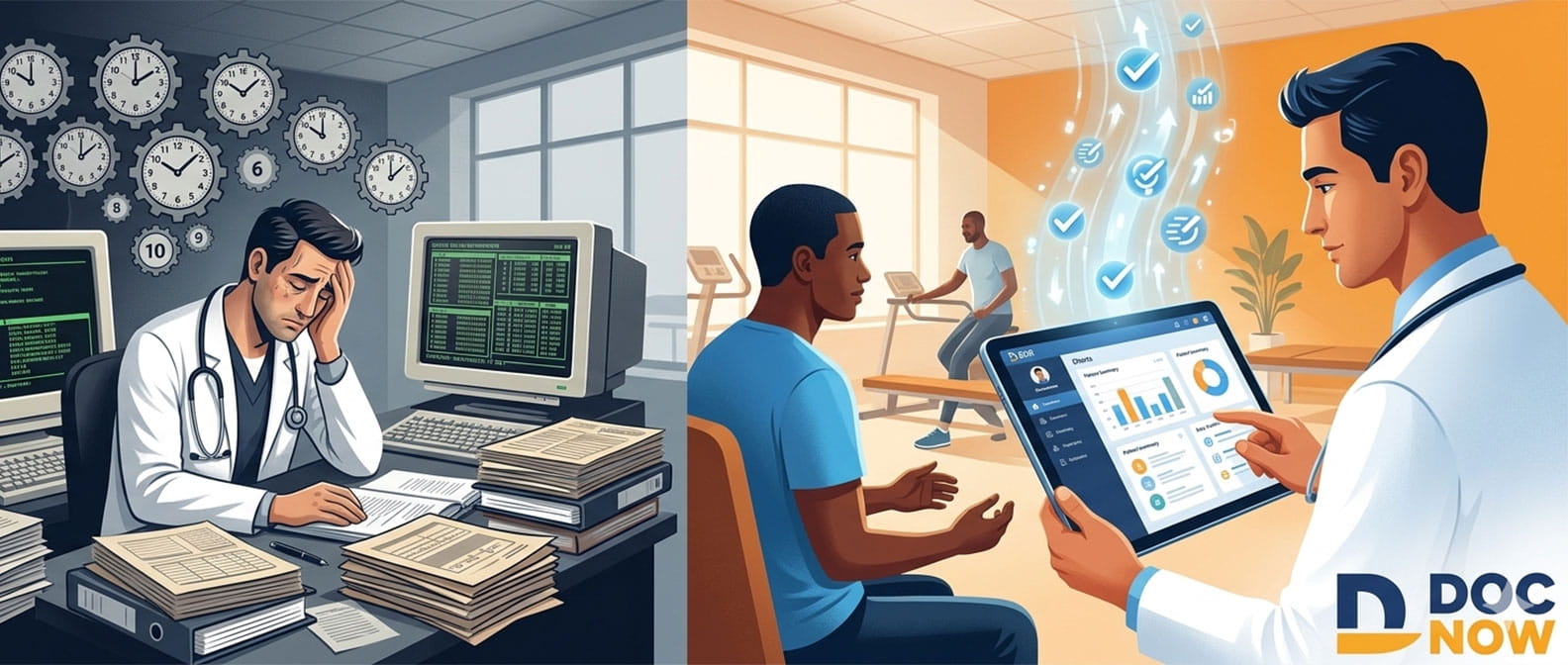
Why Modern Documentation Workflows Matter for PM&R Providers in Post-Acute Care
Physical Medicine & Rehabilitation (PM&R) groups operating in skilled nursing facilities (SNFs) face increasing pressure to document efficiently, coordinate across care teams, support PDPM requirements, and maintain accurate billing workflows — all while managing high patient volumes across multiple facilities.
Unfortunately, many EHR systems used in post-acute care environments were not designed specifically for the realities of PM&R workflows.
The result is operational friction that slows providers down, creates documentation fatigue, increases compliance risk, and impacts reimbursement accuracy.
For PM&R organizations, selecting the right EHR platform is no longer just a technology decision — it directly affects clinician efficiency, patient throughput, billing performance, and scalability.
Below are 10 of the most common workflow challenges PM&R groups encounter in post-acute environments and what to look for in a modern platform.
1. Duplicate Documentation Across Therapy and Physician Workflows
PM&R providers frequently work alongside therapy teams and often need visibility into rehabilitation progress, functional outcomes, and therapy documentation.
In many systems, information becomes siloed between:
- Therapy notes
- Physician documentation
- Facility documentation
- Billing systems
This creates unnecessary duplication and fragmented workflows.
What to Look For
Modern post-acute EHR platforms should support:
- Shared interdisciplinary workflows
- Integrated therapy visibility
- Efficient data sharing
- Reduced duplicate charting
- Streamlined coordination across care teams
Platforms that integrate with systems like Net Health can help improve visibility into therapy documentation and rehabilitation workflows while reducing operational friction.
2. Poor Mobile Documentation Experience in SNFs
PM&R clinicians are highly mobile, often moving across multiple facilities and documenting while bedside.
Legacy systems frequently create challenges such as:
- Slow tablet performance
- Difficult bedside charting
- Excessive clicking
- Frequent login interruptions
- Limited mobile usability
What to Look For
A modern post-acute PM&R platform should provide:
- Mobile-first workflows
- Fast bedside documentation
- Tablet optimization
- Quick patient access
- Reliable cross-facility performance
Efficient mobile workflows are essential for clinician productivity in SNF environments.
3. Limited Visibility Into PDPM-Related Data
PDPM has significantly increased the importance of accurate documentation and interdisciplinary coordination within skilled nursing facilities.
PM&R providers often need access to:
- Functional scoring
- Therapy utilization trends
- Diagnosis documentation
- Clinical complexity indicators
- Care coordination data
When this information is fragmented across systems, workflow efficiency and reimbursement accuracy can suffer.
What to Look For
Organizations should prioritize platforms that support:
- PDPM-related workflow visibility
- Integrated documentation workflows
- Interdisciplinary coordination
- Easy access to therapy-related data
- Reporting capabilities tied to SNF reimbursement models
Better workflow alignment can help support operational and financial performance.
4. Excessive Administrative Burden
Many PM&R clinicians spend large portions of their day navigating administrative tasks instead of focusing on patient care.
Common workflow bottlenecks include:
- Manual data entry
- Repetitive note completion
- Searching for patient information
- Managing disconnected systems
- Re-entering billing details
What to Look For
Modern EHR systems should focus on:
- Documentation efficiency
- Streamlined workflows
- Smart templates
- Auto-populated fields
- Integrated billing support
Reducing administrative overhead improves both clinician satisfaction and operational scalability.
5. Weak Charge Capture Processes
Charge capture issues remain a major challenge for PM&R groups operating in SNFs and long-term care settings.
Disconnected workflows can lead to:
- Missed billing opportunities
- Delayed claims
- Incomplete documentation
- Coding inconsistencies
What to Look For
Organizations should evaluate:
- Integrated charge capture workflows
- Procedure-linked documentation
- Coding support
- Billing visibility
- Incomplete documentation alerts
The right workflow can improve reimbursement accuracy and reduce revenue leakage.
6. Limited Interoperability Across Facility Systems
PM&R groups often work with facilities using different systems such as:
- PCC
- MatrixCare
- PointClickCare
- Therapy platforms
- Billing systems
Without strong interoperability, clinicians are forced into inefficient manual workflows.
What to Look For
A strong EHR platform should support:
- Facility integrations
- Reliable patient synchronization
- Therapy system visibility
- API flexibility
- Efficient cross-platform workflows
Integration with therapy-focused systems such as Net Health can help improve visibility into rehabilitation documentation and interdisciplinary coordination.
7. Rigid Templates That Slow Clinicians Down
Many PM&R providers struggle with templates that are overly rigid or poorly designed for post-acute workflows.
This often results in:
- Longer documentation times
- Inconsistent note quality
- Excessive clicking
- Reduced workflow flexibility
What to Look For
Modern systems should provide:
- Flexible templates
- Specialty-specific workflows
- Smart defaults
- Faster note completion
- Configurable documentation paths
The goal should be to support clinician workflows instead of creating unnecessary documentation friction.
8. Poor Operational Visibility for Leadership
PM&R leadership teams need visibility into:
- Provider productivity
- Documentation completion
- Workflow bottlenecks
- Billing performance
- Facility trends
Without strong reporting tools, organizations may struggle to optimize operations.
What to Look For
Modern platforms should include:
- Productivity dashboards
- Workflow analytics
- Billing visibility
- Documentation tracking
- Operational reporting
Data visibility supports better decision-making and scalability.
9. Compliance and Audit Challenges
PM&R groups operating in SNFs must maintain strong documentation practices to support:
- Compliance initiatives
- Billing audits
- Facility coordination
- Quality reporting
- Reimbursement requirements
Disconnected workflows increase compliance risk and administrative burden.
What to Look For
Organizations should evaluate:
- Structured documentation
- Audit readiness tools
- Reporting automation
- Workflow standardization
- Compliance support features
Efficient compliance workflows reduce operational risk and administrative overhead.
10. No Ambient AI or Dictation Workflows
One of the biggest emerging opportunities in post-acute healthcare is ambient documentation technology.
Many PM&R providers still spend hours manually typing notes after rounds or completing documentation late into the evening.
This contributes to:
- Documentation fatigue
- Clinician burnout
- Slower workflows
- Reduced patient interaction time
What to Look For
Modern PM&R-focused EHR platforms are increasingly incorporating:
- Voice dictation
- Speech-to-text workflows
- Ambient AI documentation
- Automated note generation
- Intelligent clinical assistance
These tools can significantly improve documentation efficiency while helping clinicians focus more on patient care and less on administrative work.
Choosing the Right EHR Platform for PM&R Groups
Not all EHR systems are built for the unique realities of PM&R workflows in skilled nursing and post-acute care environments.
When evaluating platforms, PM&R organizations should prioritize:
- Mobile usability
- Workflow speed
- Interoperability
- Therapy integration visibility
- PDPM support
- Documentation efficiency
- Charge capture workflows
- Ambient AI readiness
The right platform can help organizations improve operational efficiency, clinician satisfaction, and financial performance.
Final Thoughts
As PM&R groups continue to grow within post-acute care settings, workflow efficiency is becoming increasingly important.
Organizations relying on outdated or disconnected systems may face growing challenges around documentation burden, reimbursement accuracy, and clinician burnout.
Modern EHR platforms designed specifically for post-acute care — especially those supporting interoperability with therapy systems like Net Health and workflows aligned with PDPM requirements — can help PM&R groups operate more efficiently while supporting better patient outcomes and long-term scalability.
Ready to Get Started?
DocNow Post-Acute EHRs is live and ready to simplify your prescribing. If you're a DocNow customer, it's time to see how easy prescribing can be.
REQUEST A DEMO


